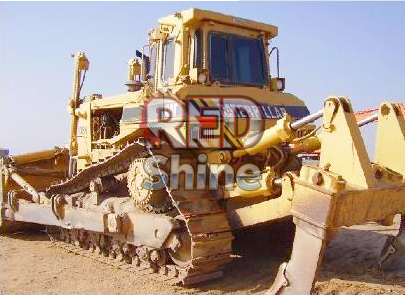

The CAT-D8R bulldozer utilizes hydro-mechanical transmission, with the torque converter, transmission, and brakes controlled via a hydraulic system. If the hydraulic system malfunctions, the bulldozer will be unable to perform earthmoving operations or fail to reach normal travel speeds. The following outlines three primary methods for troubleshooting hydraulic system failures that result in weak performance.
Distinguishing between engine and transmission system failures
When a bulldozer exhibits weak travel performance, the first step is to determine whether the issue lies with engine power or transmission system power. Conduct a test by operating the bulldozer with the blade under maximum load. When the bulldozer is unable to push the soil, observe the engine speed. If the engine speed drops and the tracks continue to rotate slowly, it indicates insufficient engine power while the transmission system is functioning normally. Conversely, if the engine speed remains constant but the tracks do not rotate, the engine is fine, and the issue is weak transmission power.
Possible causes for weak transmission performance include:
Internal leakage in the transmission brake pump (one of the three pumps) due to wear, preventing pressure buildup.
The brake valve spool is worn, stuck, or improperly adjusted, resulting in insufficient pressure to release the brakes.
Wear, sticking, or oil passage blockage within the transmission valve, causing insufficient pressure in the transmission control circuit. This leaves the clutches in the transmission in a partially engaged state.
A torque converter malfunction, resulting in insufficient torque transmission.
Testing the Transmission Brake Pump Pressure
Measure the pressure from the transmission brake pump to the filter. The normal pressure is approximately 3200 kPa. If the pressure is 1000 kPa lower than normal, it may cause weak travel performance. During pressure measurement, observe the speed of the pressure gauge needle movement to assess the pump's condition. If the pressure builds slowly, it indicates internal wear and internal leakage in the pump, or a clogged pump inlet, resulting in reduced pump displacement and system pressure. Clearing debris from the pump inlet or repairing the transmission brake pump will resolve the issue.Measuring the Brake System Pressure
The bulldozer's transmission control system utilizes a priority valve to achieve brake priority. The normal pressure of priority valve should be 2900 kPa. If the pressure is too low, it indicates the brake valve is bleeding off oil. The bulldozer uses a brake valve to control braking. Observe that when the engine starts, there is no pressure or not at pressure test point, when the hand brake (lock lever on the gearshift mechanism) is released, the pressure should be approximately 3200 kPa. If the pressure drops below 2200 kPa, it will cause the bulldozer to perform weakly and increase the transmission oil temperature. If the pressure falls below 1000 kPa, the bulldozer will be unable to move. During testing, you may feel a jerking sensation as the machine attempts to move but cannot.
If the failure preventing the bulldozer from moving is caused by leakage between the priority valve and the brake cylinder, follow these steps:
Inspect the lock lever rod and the foot brake rod to see if they are properly adjusted. If the lock nut on the rod has loosened and shifted from its adjustment position, it changes the valve spool stroke, preventing the spool from opening and thus failing to release the brake.
Clean and inspect the brake valve assembly. If the spool and valve seat are not severely worn, simply cleaning debris that is sticking or blocking the spool will typically resolve the issue.
___RedShine Machinery